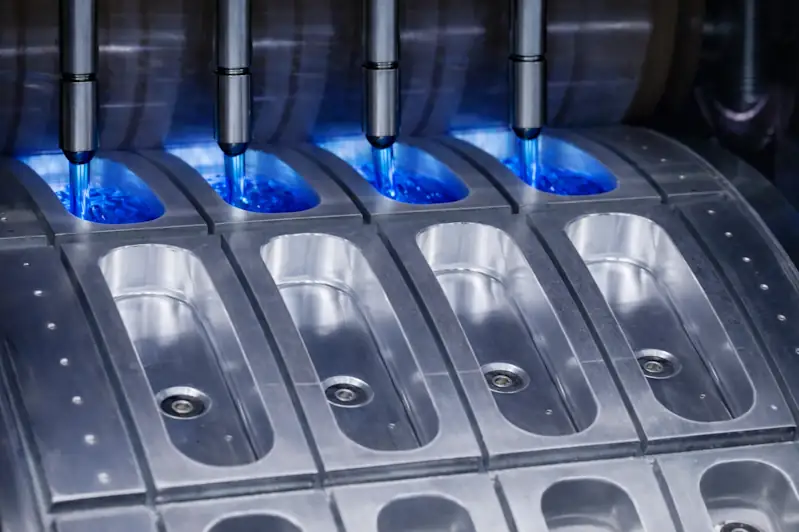
Water soluble film processing in a vacuum packaging machine

Technical Guides for Water Soluble Films

Technical guidance on dissolution, material properties and processing

Water-soluble PVOH films are used in demanding industrial applications where dissolution behavior, mechanical performance, compatibility and process stability must be carefully controlled. These technical guides provide structured information to help formulators, converters and industrial users better understand the material and make informed decisions during development, testing and production.

 Dissolution of PVOH Films

Water-soluble PVOH films are designed to dissolve under controlled conditions, but dissolution behavior can vary depending on temperature, agitation, film structure and formulation compatibility. Understanding these factors is essential for selecting the right film and achieving reliable end-use performance.

PVOH films dissolve when they come into contact with water, forming a polymer solution. The speed and completeness of dissolution depend on both the internal structure of the film and the external process conditions.

Water temperature
Higher temperatures accelerate dissolution by increasing polymer mobility. Some film grades are designed for cold water, while others require warm or hot water.

Agitation and mixing
Water movement improves contact between the film and the surrounding medium, increasing dissolution speed and consistency.

Film thickness
Thicker films contain more material and generally require more time to dissolve.

Degree of hydrolysis
Highly hydrolyzed grades usually dissolve at higher temperatures, while partially hydrolyzed grades tend to dissolve more easily in cold water.

Water volume and concentration
Limited water availability or high product concentration can reduce dissolution efficiency and slow complete solubility.

Interaction with formulation
Certain packaged chemicals may influence dissolution behavior, either delaying or accelerating it depending on compatibility.

Water-soluble PVOH films can be engineered to dissolve under different temperature conditions depending on application requirements. Selecting the appropriate dissolution profile is critical to ensure correct product performance and user experience.

Cold water-soluble films
These films are designed to dissolve at lower temperatures, typically below 30–40°C. They are commonly used in applications such as detergents and unit-dose packaging, where dissolution must occur quickly during normal use conditions without the need for heating.

Hot water-soluble films
These films require higher temperatures to dissolve, typically above 40–60°C. They are often used in industrial applications where controlled or delayed dissolution is required, or where processing conditions naturally involve elevated temperatures.

Selection considerations
The choice between cold and hot water-soluble films depends on the application, water temperature during use, required dissolution time and compatibility with the packaged formulation. Incorrect selection may lead to incomplete dissolution or premature film degradation.

Dissolution requirements should always be defined according to the final application. Laboratory evaluation is useful, but validation under real process conditions is essential to confirm performance.

Select the film grade according to required dissolution temperature
Ensure sufficient water volume and agitation
Consider formulation compatibility during film selection
Validate dissolution under actual end-use conditions

 Material Properties of PVOH Films

The technical performance of water-soluble PVOH films depends on a combination of mechanical, chemical and environmental properties. A proper understanding of these characteristics helps define the right film for each application and improves process reliability.

PVOH films combine water solubility with mechanical strength, flexibility and controlled performance under specific environmental conditions. Their behavior depends on formulation, degree of hydrolysis, thickness and exposure to humidity and temperature. These properties must be considered together when selecting a film for industrial applications.

Mechanical strength and flexibility
PVOH films provide good tensile strength and elongation, allowing reliable forming, sealing and handling when properly conditioned. Mechanical performance depends on film grade, thickness and environmental conditions.

Controlled solubility behavior
Dissolution can be engineered according to temperature and application requirements, with grades designed for cold or hot water conditions.

Barrier and permeability properties
PVOH films can offer good barrier performance against certain gases such as oxygen, while remaining sensitive to moisture. Permeability characteristics vary depending on formulation and grade.

Chemical, oil and solvent resistance
Depending on formulation, PVOH films can show resistance to oils, greases and certain chemical environments. However, some solvents or active ingredients may plasticize the film or affect long-term stability, making compatibility evaluation essential.

Surface and convertibility characteristics
Film surface properties influence friction, sealing performance and behavior during converting processes. PVOH films can be processed using standard technologies and may support operations such as sealing, cutting and forming under controlled conditions.

Optical properties and appearance
PVOH films can provide high transparency and a clean visual appearance, supporting product visibility, inspection and presentation when required.

Antistatic and release behavior
Depending on formulation and processing conditions, PVOH films may exhibit antistatic properties and controlled release behavior, which can facilitate handling, processing and mold release in certain applications.

Printability and surface modification
PVOH films can be printed or embossed depending on surface treatment and processing requirements. These characteristics may be relevant in applications where identification, branding or product differentiation is needed.

Humidity strongly influences film behavior. High humidity can make the film softer and more flexible, while low humidity can increase brittleness and the risk of cracking.
Storage conditions are critical. Uncontrolled humidity and temperature can alter film performance before the material reaches the production line.

Store films in controlled humidity conditions
Avoid sudden environmental changes
Handle the film carefully to reduce mechanical stress
Select the film grade based on both application and storage conditions
For formulation compatibility or film selection support, contact our technical team.

 Processing of PVOH Films

Processing water-soluble PVOH films requires careful control of environmental conditions and machine settings. While they can be used in standard industrial systems, their sensitivity to humidity and temperature requires a more controlled approach than conventional plastics.

PVOH films can be processed in form-fill-seal and thermoforming systems, provided that film grade, machine parameters and environmental conditions are properly aligned.

Film feeding
Correct tension and alignment are required to prevent misfeeding, blocking or jamming.

Sealing parameters
Temperature, pressure and dwell time must be optimized to ensure consistent and reliable seals.

Environmental conditions
Humidity and temperature influence film behavior throughout feeding, forming and sealing operations.

Forming temperature
The film must reach the correct temperature to achieve the required flexibility without losing structural integrity.

Vacuum pressure
Proper vacuum is essential for accurate cavity formation.

Mold design
Geometry, venting and surface finish affect film distribution, release behavior and shape quality.

Film pre-conditioning before production can improve consistency and reduce processing issues. Stable environmental control is especially important in industrial converting environments.

Adjust machine parameters according to film specification
Control production area humidity and temperature
Use film grades suited to the selected processing technology
Validate process performance under real operating conditions
For formulation compatibility or film selection support, contact our technical team

 Chemical Compatibility of PVOH Films 

Chemical compatibility is one of the most critical factors in applications involving liquid packaging. Film performance depends not only on the polymer itself, but also on how the formulation interacts with the material over time.

PVOH films can interact with water, solvents, surfactants and other formulation components. These interactions may affect seal integrity, mechanical performance, permeability and long-term stability.

Water content
Water content in the formulation should generally not exceed 3% to 4%. Higher levels may weaken the film structure, reduce mechanical strength and increase the risk of premature degradation or leakage.

pH range
Formulations should typically remain within a pH range of 7 to 10. Outside this range, compatibility may vary and application-specific testing is recommended.

Plasticizing effect
Certain ingredients such as solvents, surfactants or glycols may soften the film and reduce mechanical performance.

Chemical interaction
Some materials may alter the film structure or long-term behavior. For the list of incompatible products, users should contact our technical team.

Permeability
Water and certain active components may migrate through the film over time, affecting performance.

Stability over time
Compatibility issues may not appear immediately and often become visible during storage.

Poor compatibility can lead to leakage, sweating, stickiness, deformation or changes in dissolution behavior. For this reason, compatibility must be assessed before scale-up.

Compatibility should be evaluated under real storage and handling conditions. Accelerated aging tests are highly recommended for long-term assessment.

Evaluate formulation composition before film selection
Use film grades designed for liquid applications
Perform compatibility and stability testing
Monitor performance throughout storage and transport
For formulation compatibility or film selection support, contact our technical team

 Packaging Project Using PVOH Films

Developing a successful water-soluble packaging solution requires more than selecting a film. Formulation, machine technology, dissolution profile and processing conditions must all be evaluated together as part of one integrated system.

A PVOH packaging project should be approached step by step, starting with formulation compatibility and ending with industrial validation. Early technical assessment reduces risk, development time and scale-up failures.

Step 1: Formulation Evaluation and Compatibility
The project should start by evaluating water content, pH and chemical composition. Compatibility issues identified early can prevent major downstream problems.

Step 2: Film Selection for Initial Testing
Film grade selection should consider dissolution profile, mechanical properties and chemical compatibility. Early testing with more than one film type is recommended.

Step 3: Laboratory Testing and Prototyping
Manual sealing and small-scale forming trials help validate basic feasibility before industrial implementation.

Step 4: Dissolution Profile Definition
The required dissolution behavior must match the final application. Water temperature, exposure time and agitation are key variables.

Step 5: Processing Technology Selection
FFS systems are often preferred for industrial and professional uses focused on cost efficiency and throughput. Thermoforming is more common in consumer formats where shape definition and presentation are more important.

Step 6: Interaction Between Machine, Film and Formulation
Machine, film and formulation must be evaluated together. A change in one variable usually affects the others.

Step 7: Process Optimization and Machine Settings
Temperature, pressure, vacuum and tension should be adjusted according to the selected film and application. Switching from another supplier’s film often requires setting adjustments.

Step 8: Validation and Scale-Up
Once initial performance is confirmed, long-term validation under real production conditions is essential to ensure consistent behavior.

Project development involves multiple interacting variables. Our technical team can support formulation evaluation, film selection, compatibility testing and process optimization.